


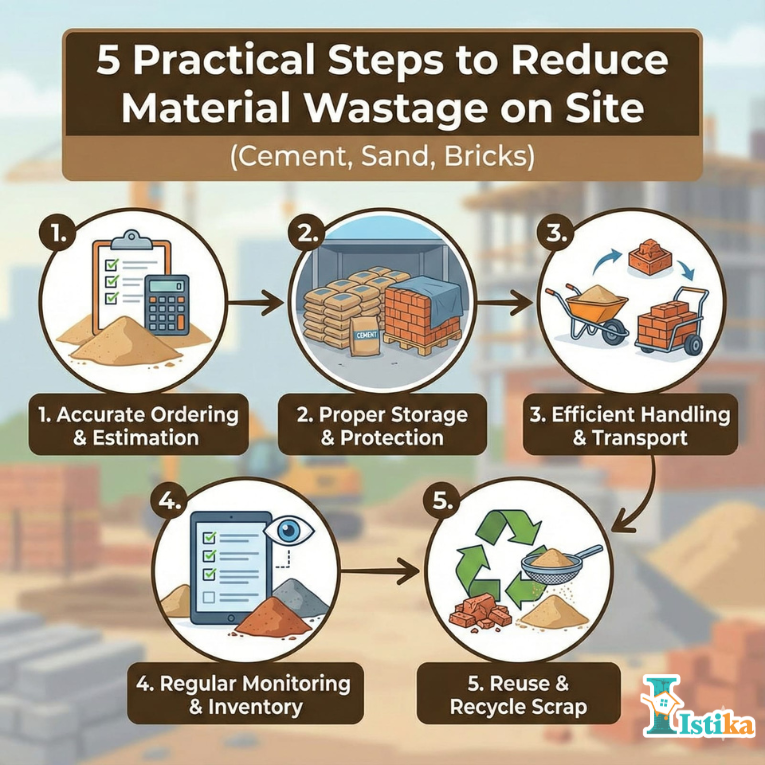
Material wastage at a construction site is something every contractor deals with. Even homeowners building their small house see it. A few bags of cement go missing, sand gets washed away in the rain, bricks break while unloading… and suddenly the overall budget goes up. Sometimes it feels small. But by the end of the project, the loss looks big.
Most people don’t plan for wastage. And that’s where money leaks happen. In today’s blog, let’s talk about 5 simple and practical steps to reduce wastage of cement, sand, and bricks. These are things anybody can follow. And when you order building materials online from trusted platforms like Istika Building Materials, the control becomes even better because you know exactly what quantity is coming, on time. Let’s get into it.
Cement is one of the easiest materials to lose money on. It absorbs moisture even from the air. One small mistake in storage, and a full stack becomes hard lumps. Many sites keep cement bags directly on the floor. Or keep them outside with just a plastic sheet on top.
Better approach? Raise the bags on a wooden platform or pallets. Keep at least a 15–20 cm gap from the floor. Don’t lean cement bags against walls; that’s another place where moisture comes in. And don’t store too many bags for too long—cement has a shelf life.
Even small improvements, like covering the bags with tarpaulin and tying them properly, save money. When you buy cement online from Istika, it usually arrives in fresh condition and sealed well. So half the job is already done. You just need to store it right.
Also, use the FIFO method – first in, first out. Old bags should be used before new ones. Many sites forget this. A simple checklist prevents a lot of wastage.
Sand is tricky. It easily mixes with mud or gets washed away, especially during rainy seasons. Many contractors order extra sand just because a lot gets wasted in the handling. When workers shovel sand, spillover happens. Some digging areas are left uncovered, and sand simply scatters.
First, choose a good spot to unload. Hard surface, closed edges, away from vehicle movement. If the soil is loose, lay a plastic sheet under the sand before dumping. This stops sand from mixing with dirt.
Second, create small boundaries using bricks or wooden planks. This prevents sand from flowing away. During rains, cover it well.
When you check the sand price online on Istika, you get a clear idea of how much you are spending. Good quality river sand or M-sand should not be wasted like that. Small barriers and smart handling save a surprising amount.
3. Reduce Brick Wastage by Handling and Transportation Care
Bricks break easily. Especially local bricks. The biggest reason for wastage is rough handling during unloading. Labor just throws bricks down from the truck. By the time you start work, you have a pile of broken pieces.
Instead, instruct workers to unload properly. Make two people stand close to the stack and pass bricks carefully. Yes, it takes slightly more time. But if you are using costly or quality bricks, that small care will save a lot. When you buy bricks online, they are often properly stacked so the damage is reduced during transport.
Also, don’t store bricks at random open places. They should be kept on even ground. If one corner is soft soil, the entire stack tilts and breaks. Cover bricks when rain is expected so water doesn’t weaken them.
Even in masonry work, train workers not to cut bricks unless needed. Some teams cut bricks unnecessarily because it’s faster for them. That directly increases brick wastage on site.
4. Plan Material Quantity Based on Actual Site Measurements
Most wastage comes from wrong quantity estimation. People order too much cement or too much sand “just in case.” Excess materials lie unused and slowly get spoiled.
Accurate quantity planning is essential. Check your site dimensions. Calculate exactly how much cement, sand, bricks, and aggregates you actually need for the week—not for the whole project at once. When you order construction materials online, you can get fast delivery. So there’s no need to stock so much and risk wastage.
Istika Building Materials helps contractors with the correct quantities because everything is measured in clear units. You can order cement bags, TMT steel, bricks, sand, and aggregates in exact numbers. If you need more, order again. If you need less, avoid unnecessary stock. Weekly ordering reduces wastage drastically.
5. Train Your Workers – The Most Ignored but Most Important Step
Even if you buy the best quality materials and store them well, careless workers can still cause wastage. Sometimes it is not their fault; they were never taught proper handling. A small 10-minute briefing every morning works wonders.
Explain why cement needs careful handling.
Show them how to stack bricks.
Tell them why sand should not be shoveled carelessly.
Assign a site supervisor to keep an eye on daily material usage.
When labor understands that unnecessary wastage increases cost and affects the entire project, they become more responsible. Regular training sessions or simple instructions from the contractor reduce wastage better than any other method.
Reduce Electrical Wire Wastage
Electrical wires also get wasted easily on-site due to overcutting, rough handling, and storing them in open places. When wire coils are dragged on the floor or left in moisture, the insulation gets damaged and the wire becomes useless. The simple fix is to keep wires in their original roll, store them in a dry corner, and measure properly before cutting. Many electricians cut extra length “just in case,” but proper planning saves a lot. Using good brands like Havells or Polycab from Istika also reduces wastage because quality wires don’t peel or crack easily.
Bonus Tip: Always Buy Quality Materials
Cheaper materials break faster and lead to more wastage. Low-grade sand contains impurities; it reduces strength and needs more cement. Poor-quality bricks crack easily. Cement from unreliable sources comes lumpy.
Better to buy branded cement, good clay bricks, and clean sand. Platforms like Istika Building Materials let you compare prices and choose quality materials at the best rate. When you buy building materials online, you get the advantage of consistent quality, verified brands, and faster delivery.
Quality reduces wastage. And wastage reduction saves money.
Final Thoughts
Reducing material wastage is not a complicated thing. It just needs attention. Whether you are building a home or handling a commercial project, small steps like proper storage, careful unloading, good planning, and worker training make a tremendous difference.
Cement, sand, and bricks are the basis of any construction site. And these are exactly the materials that get wasted the most. With a platform like Istika Building Materials, you not only buy cement online or check sand price easily, but you also stay in full control of your site materials with clear quantities and reliable delivery.
If you want more such construction tips or want help in ordering your building materials online, Istika is always there.